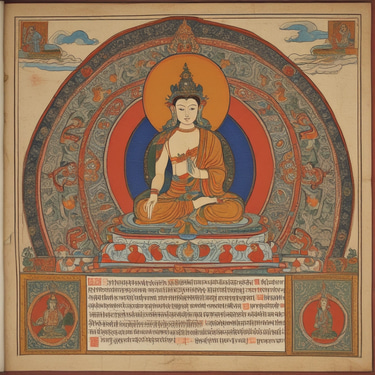
Mulsarvastivada Vinaya Origin Stories
1. Killing a human #31 Parajika (See Note A)
INCIDENT: The precept for killing was first established to regulate the bhiksus and was later applied to bhiksunis. Once, when the Buddha was residing at the Gabled Hall on the bank of Markatahrada in Vasali, he taught the bhiksus that impure conduct would result in endless suffering. He also taught them to contemplate the impurities of the body, to rid themselves of clinging and greed. With his supreme wisdom and divine eye, he saw the previous lives of the 500 bhiksus in the sangha. He saw that they were hunters who had been drowning in the lower realms for many eons until this life, when they had the opportunity to be ordained and receive the full precept. He saw that their lives were short and the time had come for them to kill one another. Perceiving that he could not interfere with their karma, the Buddha addressed the monks and said, “I wish to go to a solitary retreat for half a month, and do not wish to be disturbed except to receive my alms food.”
While the Buddha was away, the bhiksus practiced diligently. They meditated on the impurities (unattractiveness) of the body, and some of them attained the first, second, and third stages of sainthood. However, some among them were disgusted by their unattractiveness and wished to die. At that time, some bhiksus committed suicide or asked the recluse Migalandika to kill them in exchange for their robe and bowl.
Some time after the bhiksus' retreat, the congregation assembled at Vasali to hear the Buddha teach. On that day, the Buddha taught Anapannasati-samadhi, which he said would dissolve unwholesome thoughts and defilements.
Afterward, he reprimanded the bhiksus who were killing other bhiksus or allowing Migalandika to kill bhiksus in the retreat at Vaggumudatiriya.
RULE VASALI: “If any monk intentionally deprives a human being of life or searches out an assassin for one, he is also Pārājika and is unaffiliated.”2 A getsul/getsulma incurs a duskrata, but will still be expelled (Chuehmen, 2013).
2. Killing an animal Payattika #463/Pacittiya #61
INCIDENT: A monk named Kalodyin (Sadvargika) hated birds and used a sling-shot to kill them. The dead birds that he killed were decomposing beside the monastery. When the lay followers came to the temple, they were shocked to see that so many birds were killed. When the other bhiksus heard about this, they reported it to the Buddha who established a rule. The Buddha reprimanded bhiku Kalodyin for being cruel.
RULE JETA GROVE OF ANTHAPINDIKA: “If a bhikshu/bhikshuni deliberately destroys the life of an animal, they commit a Payattika.”
A getsul/getsulma incurs a duskrata (wrongdoing).
3. Striking an animal #19,4 Payattika/ Pacittiya (See Note B)
INCIDENT: Bhiksu Chanda(Svg) built a house and used the water mixed with earth that contained living creatures. .
Some householders observed this and criticized the Bhikshu for killing tiny living creatures in the water. When other Bhiksus heard about this, they reported it to the Buddha, who established a rule.
RULE JETA GROVE: “If a monastic, knowing that water has living creatures in it, pours it onto the grass or ground or should have others pour the water onto the grass or ground, he commits a Payattika.” A getsul/getsulma incurs a duskrata.
4. Using something containing an animal for self or others #47 (See Note C)
INCIDENT: Sadvargikas drank water from a river, and when lay people saw this, they criticized them for killing tiny creatures in the water. (See Note C).
RULE AT JETA GROVE: “If a bhiksu/bhiksuni knows water contains insects and still consumes it, they commit a Payattika.”
5. Sexual intercourse #1, Parajika
As mentioned in Fascicle 1 of “The Four Parts of Dharmaguptaka Vinaya.”5 The precept on sexual conduct was established twenty years after Buddha’s enlightenment.
INCIDENT: Bhiksu Sudinna (also known as Kalandakaputta), son of the richest merchant in the village of Kalandaka, returned home during a famine, eight years after ordination, to beg for food for his sangha, as the famine diminished the alms that were received by the Buddha and his 500 disciples.
Before his ordination, his father and mother were reluctant to permit him to live the homeless, celibate life, so when he returned home they tried to persuade him to disrobe. However, bhiksu Sudinna told them, he was quite happy with his monastic life and refused. Sudinna’s mother asked him three times to give the family offspring. “Mother, that is possible for me to do,” he replied, and fathered a grandchild.
Soon after, Sudinna felt remorse, and other monks noticed, Sudinna was not looking well, and they questioned him about his appearance.
RULE AT KUTAGARA-SALA: The matter came to the attention of the Buddha, who reprimanded the monk in front of the assembly and formed this training rule,“If any monk engages in sexual activity: he is Pārājika, he is unaffiliated.”6 A getsul/getsulma incurs a duskrata, but will still be expelled (Chuehmen, 2013).
6. Taking what is not given #2, Parajika (See Note D)
INCIDENT: Bhikshu Dhaniya took good-quality wood from King Bimbisara without the king's or his subjects' knowledge to build his dwelling place. Bhiksu Karu, an ex-minister of the king Bimbisara, informed the Buddha that under the law of the country, materials that were stolen and valued at five units of Masa (the highest value of gold coins in India at that time) would mean a sentence of death to the thief. However, the king, being a devout Buddhist, reprimanded and excused the bhikshu (See Note D).
RULE AT RAJAGRHA: “If a bhiku/bhiksuni takes what is not given with the intention to take it from an inhabited place or a secluded place and being caught, is imprisoned, banished from their country, by the authorities who condemn their actions by saying: “You are a fool, you are a thief, you are ignorant,” or scheduled to be executed, then they have committed a Parajika and are no longer in communion with the sangha.”7 A getsul/getsulma incurs a duskrata, but will still be expelled (Chuehmen, 2013).
7. Speaking falsely #4, Parajika
INCIDENT: On the bank of Markatahrada Vasali, there was famine and it was difficult for the Sangha to obtain food. The Buddha gathered the monks and told them to go their own way during the rainy season retreat. The Buddha stayed in the city of Vasali. Some of the monks remained in the countryside near Vasali and others proceeded to Vaggumudatiriya Monastery on the riverbank of Vaggumuda. Since grain was very expensive, it was difficult to beg for alms. The Bhiksus at the riverside monastery told the lay people that they had attained arhantship and supernatural powers. Some of the laypeople were pleased to hear that. Although they, too, were having difficulty obtaining food, they offered whatever they could to the enlightened bhiksus. The Vaggumudatiriya bhiksus were well-fed, healthy, and had good complexion. Those staying at Vasali were not so lucky; they were thin and looked emaciated.
After the rainy season retreat, all the bhiksus returned to pay their respect to the Buddha. The Buddha asked whether they had lived in harmony and whether they had trouble obtaining food while they were away. Those staying in Vasali told the Buddha that they lived harmoniously, but times were bad, and food was hard to get. Those who lived in Vaggumudatiriya riverside Monastery said they lived harmoniously and had no problem getting food.
RULE AT VASALI: “Times are bad, food is expensive, and the people are suffering from hunger. What skillful means have you used to receive food?” The Buddha asked. The bhiksus then told the Buddha how they managed to receive food through falsehood by telling the lay people that they had supernatural powers. The Buddha scolded them for being foolish and dishonest.8 “The worst kind of thief is one who tells others they have attained supernatural powers to obtain food.”
“If any monk who lacks higher knowledge claims, about himself, a superior human state sufficient for noble knowledge and vision, [saying] Thus I know, thus I see, then on a later occasion, whether he is being questioned about it or not, intent upon purification from what was committed, he says thus: Not knowing thus, Venerables, I said “I know,” not seeing, “I see” – vainly, falsely, pointlessly – he/she is also Pārājika and is unaffiliated.”9 A getsul/getsulma incurs a duskrata, but will still be expelled (Chuehmen, 2013).
8. Baseless Defamation #2, Samghavasesa/Sanghadisesa-suspension
INCIDENT: Bhikku Dabba Mullaputta was an “assignor of sleeping, sitting places, and allocator of meals. One night, Bhikku Bhummajaka (Svg) arrived late to the monastery, and Bhikku Dabba Mullaputta gave him an inferior room. Bhummajaka immediately became angry and accused him of discriminating against him. The following day, a lay follower invited the sangha for a special meal; however, the lay follower, feeling bhiksu Bhummajaka was not a good monk, served him inferior food outside the house. The bhiksu then thought that bhiksu Dabba Mullaputta was responsible for his poor treatment and engaged his sister bhikshuni Mettiya (Svg) to accuse Dabba Mullaputta of a Parajika.10 Following the wishes of her brother and their followers, she consented to report to the Buddha that she was raped by Dabba Mullaputta.11
RULE AT RAJAGRHA BAMBOO GROVE: “If any monk – corrupt, malicious, upset- groundlessly accuses a monk of Pārājika [thinking] "Perhaps I may cause him to fall from the Holy Life, then whether he is cross-examined at a later occasion or not, if that issue is groundless and the monk is established in malice: a Saṅghādisesa.”12 A getsul/getsulma incurs a duskrata.
9. Implying a wrongdoing #3,13 Sam/Sg (Note E)
INCIDENT: Bhiksu Bhummajaka, still feeling wronged by Dabbamallaputa, imagined two mating goats were his sister, bhiksuni Mettiya and Dabba Mallaputa having sex.“ I saw it with my own eyes.” His fellow monks asked him to clarify. Then bhiksu Bhumataka confirmed that what he imagined was a lie. His sangha admonished him and reported the matter to the Buddha.
RULE VULTURES PEAK RAJAGRHA: “If a bhiksu/bhikuni out of anger or resentment, citing false evidence, slanders another monastic with unfounded accusations of a Parajika with intention to ruin that monastic’s pure conduct [reputation], and some time later, whether he/she is examined or not, and the accusation is found to be from his/her anger and his/her imagination, thereafter the situation must be discussed in a formal meeting of the sangha.” A getsul/getsulma incurs a duskrata.
10. Causing a schism in the sangha #10,14 Sam/Sg
INCIDENT: Bhiksu Devadatta approached four bhiksus to attempt to cause a schism in the sangha. Bhiksu Kokalika (sadvargika) questioned how they would do this. Devadatta replied: ‘they would ask for five points that correspond to Buddha’s values of few wishes, contentment, self-effacement, of austerity practice, of inspirational [conduct], of diminution, [unwholesome states], of initiating energy.15 Devadatta added that his austere practices- the way of hardship- would not be to the liking of most Dharma practitioners, and not to the Buddha’s liking; therefore, there will be a split in the sangha.’ In this way, Devadatta divided the sangha. He and his followers adhered to the rigid Five Points as the only way to practice purification, without allowance for any alternate approach to the Five Points. Devadatta proceeded to praise his points to the laypeople. When the other monks heard the laypeople complaining that the Buddha’s teachings were only to benefit himself, they admonished Devadatta, then went to the Buddha to report the laypeople's complaints. However, Devadatta proceeded to praise his Five Points to the laypeople. Devadatta and his disciples approached the Buddha. He started to speak his wish to have his Five Points adopted by the Buddha. “Enough Devadatta,” and the Buddha proceeded to elaborate the realistic Five Points, rejecting Devadatta’s. He then questioned Devadatta, who admitted his attempt to divide the sangha.
RULE AT RAJAGRHA BAMBOO GROVE: “If any bhiksu/bhiksuni attempts to cause a schism in a unified sangha, or persists in holding to an issue [he/she] has taken up that is conducive to schism, that monk is to be spoken to by the [other] monks: ‘The Venerable should not attempt to cause a schism in a unified sangha or persist in holding to an issue [he] has taken up that is conducive to schism. Let the Venerable come together with the sangha.’
"For a unified sangha that rejoices together, does not dispute, and has one recitation (Pātimokkha) dwells comfortably. When that monk is being spoken to in this way by the [other] monks, if he holds on to that same [position], that monk is to be admonished by the [other] monks up to a third time for the relinquishment of that [position]. When admonished up to the third time, if he relinquishes that [position], that is skillful (Kusala). If he does not relinquish [that position]: a Saṅghādisesa.”16 A getsul/getsulma incurs a duskrata.
11. Going along with that #11,17 Sam/Sg
INCIDENT: Followers of Devadatta were in opposition to bhikkus who said: ‘Devadatta speaks non-Dhamma, Devadatta speaks non-Vinaya.’ When this was said, the four bhikkus, who were dedicated followers, said: ‘The Venerables should not speak like that. Devadatta speaks Dhamma, Devadatta speaks Vinaya. And Devadatta takes up our interests and inclinations and expresses [them]; he knows[s], he speaks for us; we approve of that.’18 Then those monks, after reprimanding the monks who were allies [of Devadatta] reported this matter to the Blessed One.
RULE AT RAJAGRHA BAMBOO GROVE: “Is it true, monks, that there are monks who are allies of Devadatta and proponents of [his] group, when he is attempting to cause a schism in the sangha?” “It is true, Blessed One.” The Buddha, the Blessed One, reprimanded... “How is it, monks, that these foolish men will be allies of Devadatta and proponents of [his] group, when he is attempting to cause a schism in the sangha? This is not, monks, for the faith of the faithless. And thus, monks, you may recite this training rule."19
“Of that same monk, there are monks who are allies and proponents of [his] group – one, two, or three.”20 The Buddha quoted the way Devadatta’s followers spoke in the incident, as well as quoting the refutation from Buddha’s followers, as part of this training. And when those monks are being spoken to in this way by the [other] monks, if they hold onto that same [position], those monks are to be admonished by the [other] monks up to a third time for the relinquishment of that [position] when admonished up to the third time, if they relinquish that [position], that is skillful. If they do not relinquish that [position], (Suddhaso, 174) ‘It entails initial and subsequent meetings of the community’ (Thānissaro, 173). A getsul/getsulma incurs a duskrata.
12. Destroying the faith of the lay sangha #12,21 Sam/Sg
INCIDENT: Bhiksus Asvaka’s and Purnvasus’ (Svg) harmful behavior and deeds were noxious to the laity and were leading families astray from Buddha Dharma. Fellow bhiksus admonished Asvaka, and Purnvasus (Svg), who argued with their brothers. A karmen proceeding was conducted in accordance with the Vinaya, but they refused to mend their ways.
RULE SRAVASTI AT ANĀTHAPIṆḌIKA'S GARDEN: “If a bhiku/bhiksuni dwells near a village or town and leads a life considered harmful to the laity, and engages in negative deeds that are seen and heard, and families are led astray by these negative deeds, then he/she should be admonished by virtuous brothers/sisters saying: ‘Brother/sister, your life is corrupting the laity and families are led astray. Be a good brother/sister and depart from this residence.’ Should that bhiku/bhiksuni argue with the virtuous brothers/sisters, then he/she should be admonished a second time. If he/she persist with arguments, then a third time, so that they may cease. If they cease, this is good. If they persist and refuse to repent for their behavior, they commit a Samghavasesa.” A getsul/getsulma incurs a duskrata.
13. Accusing a remainder 23 (Note F), Sam/Sg
In the Dharmagupta/Pali Canon Vinaya the ‘reminders’ are seen in separate training rules somewhat similar, but with subtle definitive differences; not grouped under one training rule that applies to Getsuls/Getsulmas in the Mulasarvastivada Vinaya. Of the 13,
five ‘remainders’22 are specified in the incidents and vows 8-12.
14. Alleging favoritism #5823 Payattika/Pacittiya
INCIDENT: On this occasion, Venerable Dabba Mullaputta dressed in a worn-out robe, assigning sleeping-places, sitting-places, and allotting meals for the sangha. Furthermore, on this occasion, one robe arose from the sangha. Then the sangha gave that robe to Venerable Dabba Mullaputta. Some monks [ group of six] bhikkus denounced, criticized, and castigated: ‘The sangha allocates communal gains based on favoritism.’24
RULE AT RAJAGRHA BAMBOO GROVE: “How is it that [group of six] bhikkus, after a robe is given by a unanimous sangha, will later on engage in criticizing?… Is it true that you, monks, after a robe was given by a unanimous sangha, later on engaged in criticizing?" “It is true, Blessed One.” The Buddha, the Blessed One, reprimanded…(stock phrase vow10). You may recite this training rule: “If any bhikku/bhikkuni, after a robe is given by a unanimous sangha, later on engages in criticizing, [saying] the sangha allocates communal gains based on favoritism; a Pacittiya.”25 A getsul/getsulma incurs a duskrata.
15. Knowingly telling a lie #1, Pacittiya
INCIDENT: A Sakyan disciple, Hatthaka, was fond of debating with the Titthaya Cult (one of the ninety-six non-Buddhist practices during the time of the Buddha). If Hatthaka lost a debate, he would deny what he had said. When monks in the monastery asked about it, he would again deny what he had said. He evaded one issue by [raising another, he spoke deliberate lies and broke an agreement he previously made.26 When followers of other sects heard about this, they criticized him for his lack of propriety as the son of a Sakya. The monks in good standing reprimanded Hatthaka in various ways, yet his only response was: “Those adherents of other religions have to be beaten in some way or another. You cannot give them the victory.”27 At that point, the issue was brought to the Buddha.
RULE AT NAYAGROHA GROVE SAKYESU KAPILAVASTU: Then the Blessed One, on account of this issue, on account of this incident, having convoked the community of monks, questioned Hatthaka the Sakyan-son, asking Hatthaka, “Is it true that you approved what you had denied, denied what you had approved, evaded one issue by [raising] another, spoke deliberate lies, and broke an agreement you had previously made?” “It is true, Blessed One.” The Buddha, the Blessed One, reprimanded [him]: “[This is] inappropriate, foolish man; unsuitable, improper, not like a contemplative, not allowable, not to be done. This is not, foolish man, for the faith of the faithless, or the increase of the faithful. This, foolish man, is for the faithlessness of the faithless, and for the wavering of some of the faithful.” And thus, you may recite this training rule: “In deliberate false speech: a Pacittiya.”28 A getsul/getsulma incurs a duskrata.
16. Rejecting advice from the Sangha #13,29 Sanghadisesa
INCIDENT: On this occasion, the Buddha, the Blessed One, was dwelling at Kosambī, in Ghosita's Park. Furthermore, on this occasion, Venerable Channa engaged in misconduct. [Other] monks said, “Venerable Channa, don't act like that. That is not allowed.” He said, “What is it to you, Venerable, that you think I am to be spoken to, I should speak to you? The Buddha is ours, the Dhamma is ours, the Dhamma was realized by our young master. Just as a great wind when it is blowing might push together grass, sticks, and fallen leaves; or just as a river coming down a mountain might push together foliage, moss, and ferns; in the same way, from various names, clans, births, and families, you have been swept together when you have gone forth.”
RULE AT KOSAMBI: “If a monk is by nature difficult to speak to, and when being spoken to by the monks following Dhamma about the training rules included in the [Pātimokkha] recitation, [...] let the venerable speak to the ‘other monks’ in accordance with Dhamma. For in this way, there is development in the Blessed One’s assembly--that is, by speaking to one another and rehabilitating one another. And when that monk is being spoken to in this way by the [other] monks, if he holds onto that [position], that monk is to be admonished up to three times. If he relinquishes, his position that is skillful. If not a Sanghadisesa.” A getsul/getsulma incurs a duskrata
17. Teaching for food #24,30 Pacittiya (Note G)
INCIDENT: On this occasion, the Buddha, the Blessed One, was dwelling at SRAVASTI, at Jeta's Grove, in Anāthapiṇḍika's park. Furthermore, on this occasion, senior monks exhorting nuns were receivers of robes, alms food, lodgings, illness-supports, and medicinal equipment. [Some] group of six monks (Svg) said, “The senior monks have not done much to exhort the nuns. [But] the senior monks exhort nuns for the sake of material gain.” Those monks who were of few wishes ... How is it that a group of six monks will say, “The senior monks have not done much to exhort the nuns? The senior monks do exhort nuns for the sake of material gain.”
RULE AT SRAVASTI: “Is it true that you, monks, said 'The senior monks have not done much to exhort the nuns; [but] the senior monks exhort nuns for the sake of material gain?’ “It is true, Blessed One.” The Buddha, the Blessed One, reprimanded... “How is that you, foolish men, will say 'The senior monks have not done much to exhort the nuns [when] the senior monks exhort nuns for the sake of material gain?’ “This is not, foolish men, for the faith of the faithless... And thus, monks, you may recite this training rule. If any monk says, The senior monks have not done much to exhort the nuns; [but] the senior monks exhort nuns for the sake of material gain: a Pācittiya." A getsul/getsulma incurs a duskrata.
18. Covering with rice #33,31 Siksarani/Sekiya (prohibitive regulations)
INCIDENT: One time when the Buddha was at SRAVASTI in the garden of Anāthapiṇḍika’s, a layperson offered food for the monks’ morning meal. In the morning, Six Sadvargikas proceeded to the home of the layperson. He served thick soup and rice. The Sadvargikas asked for more, since they had covered their thick soup with rice. The layperson asked where was the thick soup, however, all the Sadvargikas were quiet. Then the layman insulted the monks. When the disciplined monks heard about this, they reported it to the Buddha.
RULE AT SRAVASTI: “Do not hide away any food with the desire to get more. This should be learned.”
19. Abuse #2 ,32 Pacittiya
INCIDENT: On this occasion the Buddha, the Blessed One, was dwelling at SRAVASTI, at Jeta's Grove, in Anāthapiṇḍika’s Park. Furthermore, on this occasion, a group of six monks (Svg) were quarreling with [a group of] well-behaved monks, abusing the well-behaved monks – by birth, by name, by clan, by work, by craft, by illness, by characteristic, by defilement, and by offenses; they abused and reviled [them] with base insults. Those monks who were of few wishes, contented, modest, conscientious, desirous of training, denounced, criticized, and castigated: “How is it that group of six monks, quarreling with well-behaved monks, will abuse well-behaved monks – by birth, by name, by clan, by work, by craft, by illness, by characteristic, by defilement, and by offenses; [how is it that] they will abuse and revile [them] with base insults?”
RULE AT SRAVASTI JETA’S GROVE: Then those monks, having reprimanded the group of six monks (Svg) in various ways, reported this matter to the Blessed One... having reprimanded the monks... having given a Dhamma talk, he addressed the monks with the allegory of a bull named Nandivisāla who belonged to a brahmin and added that profanity and contempt were also abuse. “In abusive speech: a Pācittiya.” A getsul/getsulma incurs a duskrata.
[Depending] whether one is speaking to another monk or layperson, many categories constitute verbal abuse; see ‘Method,’]33
20. Alcohol/Recreational Drugs #51,34 Pacittiya
INCIDENT: A Venerable named Sugata entered the hermitage of the ascetic Ambatitiha. A Naga living there sensed that someone had entered and spewed smoke, then fire. Venerable Sugata challenged him by concentrating on his fire element, deflecting the Naga’s fire onslaught. [Then] the Venerable went on his way to Kosambi. At that time, the Buddha was also in Kosambi. The villagers, hearing of Venerable Sugata’s victory over the Naga, wanted to give him food he could not easily get. Influenced by six monks, the villagers made pigeon liquor. Stopping at many houses during this alms round, he was offered the liquor. Finishing his alms round, Venerable Sugata passed out at the city gate. The Buddha was also exiting and instructed the bhikkus to carry him to the monastery. While sleeping, he changed his position from his head facing the Buddha to his feet facing the Buddha. At this point, the Buddha demonstrated to the monks how alcohol can distort perceptions from respect to disrespect and the inability to repeat any previous encounter with a Naga.
RULE AT KOSAMBI: The drinking of alcohol or fermented liquor is to be confessed. A getsul/getsulma incurs a duskrata.
21-24. Ornaments/garlands/make-up, fragrance #150-151 & 157, 177-78,35 Payattika Note: In Cultivation, female gender is referenced; however, the training rule in Mulasarvastivada Lineage does not specify gender. In reference to ‘garlands’ see note in Table I.
INCIDENTS: #150 Applying Perfume: six sadvargika bhiksunis applied perfume to their bodies.
#151 Using pedaliaceae (would also correspond to make-up). six sadvargika bhiksunis applied pedaliaceae to their bodies.
#15736 Wearing ornaments: Six Sadvargika bhiksunis decorated themselves with laywomen's wrist and ankle chains.
#17737 Dressing up with ornaments also found in #150 and #157.
#17838Wearing make-up applied by a non-Buddhist female: this incident refers to Bhiksuni Kala Candasrona’s sister applying perfume to her body.
When the laypeople smelled the perfume or witnessed the decorating of the bodies of the six bhiksunis, they said the bhiksunis were not different from women thieves and prostitutes. In no time, the disciplined nuns heard about it and admonished the six bhiksunis. Then brought the matter to the Buddha.
RULE AT SRAVASTI ANATHAPINDIKA’S GARDEN: “If a bhiksuni makes herself alluring with ornaments and perfume like a housewife, she commits a Payattika.” A getsul/getsulma incurs a duskrata.
25-27. Singing, dancing, music.39 Dukkata (See Note H)
INCIDENT: They danced while a woman was dancing; they sang while a woman was dancing; they played musical instruments while a woman was dancing; they directed while a woman was dancing. They danced, sang, played musical instruments, and directed while a woman was singing. They danced, sang, played musical instruments, and directed while she played.
RULE AT SRAVASTI
The rule under bad habits also includes, one should not go to see dancing, singing, or music. Whoever should do so: “An offense of wrongdoing.”
28-29. Sitting on a high seat; high bed #68,40 Making an oversize bed Payattika (Note I)
INCIDENT: Bhiksu Kalodyin (Svg) - knowing the Buddha was visiting the dwellings of the bhiksus - hired a carpenter to make a large couch in his dwelling. When the Buddha arrived, bhiksu Kalodyin proudly said, “Honorable one, look at my large couch.” The Buddha rebuked him for his extravagance.
RULE AT SRAVASTI ANATHAPINDIKA’S JETA GROVE: “If a bhiksu/bhiksuni makes a rope or wooden bed, the height of the legs must not be longer than eight Buddha-fingers, excluding the length of the frame, and if that length exceeds, they commit a Payattika.” A getsul/getsulma incurs a duskrata.
30-31. Expensive Bed/Expensive Seat #69,41 Making a bed from floss
INCIDENT: The six sadvargika filled a string bed and sitting mat with floss. When the lay people saw this, they criticized the bhiksus for killing a living being; the silkworm.
RULE: SRAVASTI ANĀTHAPIṆḌIKA’S JETA GROVE: “If bhiksu/bhiksuni uses tula to fill a stringbed, wooden bed, bedding, or sitting mat with floss, they commit a Payattika.” A getsul/getsulma incurs a duskrata.
32. Eating after noon #24,42 Taking meals at irregular hours Payattika
INCIDENT: Bhiksu Nanda and Upananda (Svg) went to the city to enjoy a festival. Because of their good looks, they became the center of attention. Then one person said, “Why is everyone just looking at the monks? We should give them food.” Nanda and Upananda received much food. After eating and watching the show, they returned to the monastery. Other monks inquired about their late return, so they told the other monks that they had eaten after noon. The disciplined monks admonished them and afterward reported to the Buddha.
RULE AT GRDGRAKUTA RAJAGRHA: “If a Bhiksu/Bhiksuni consumes food at irregular hours they commit a Payattika.” A getsul/getsulma incurs a duskrata.
NAIHSARGIKA-PRAYASCITTIKA/NISSAGGIYA PACITTIYA - forfeiture
33. Gold and Silver #9,43 Taking money personally (Jataruparajatasparsanam), Naihsargika-Prayascittika/Nissaggiya Pācittiya (forfeiture)
INCIDENT GRDGRAKUTA RAJAGRHA: Venerable Upananda (Svg) received money from a minister’s wife. He went to the city to entrust it to someone. During that time, the king and his ministers were debating whether monks were permitted to accept money. An influential minister said that the Buddha did not allow monks to accept money. The king’s ministers approached the Buddha for clarification. The Buddha explained monks should not have money or jewels, as it would increase their desire for possessions. When the virtuous bhiksus heard Venerable Upananda had received money, they reported this to Buddha.
RULE AT GRDGRAKUTA: “If a bhiksu/bhiksuni personally receives money, gold or silver, or asks someone to receive it on their behalf, or they are glad to accept it, this entails expiation with forfeiture.”
34. Wearing or keeping signs of a lay person (first degeneration)
INCIDENT: “Then at that time some śrāmaṇeras, having gone forth, put on white garments, wore fine clothes, placed garlands on their heads, anointed themselves with perfumes and unguents, and went about amidst crowds and festivities. The people, seeing this, spoke in blame: ‘How are these recluses different from laymen?’
RULE AT SRAVASTI: The Blessed One said: ‘Śrāmaṇeras should not wear garlands, nor use perfumes and unguents, nor put on ornaments, nor wear white and fine garments. Whoever does so commits an offense.”NEED FOOTNOTE 44
Footnote: Citing Text: 四分律 T 1428, 卷三十二 (juan 32), CBETA: T22, no. 1428, p. 793c15–p. 794A4 (trans Chinese, Norbu 2025)
35. Rejecting the signs of one gone forth #2 (second degeneration)44 Living apart from robes. Naihsargika-Prayascittika
INCIDENT AT SRAVASTI, JETA GROVE: The Six Sadvargika entrusted their robes to other monks to prevent the robes from being soiled and went on a long tour with only an incomplete set of robes The other monks had to take care of the robes. They spent extra time drying the robes while neglecting their own duties. Other bhiksus inquired why they had extra robes to care for. The other monks were told that they were helping the sadvargikas while they were away. Then the monks who observed this reported to the Buddha. The sadvargikas were admonished for separating from a complete robe.
RULE: SRAVASTI: “If a bhiksu/bhikshuni already has the three robes and the kathina has been returned, but they live apart from any of their three robes, even for a single night, entails expiation with forfeiture.” A getsul/getsulma incurs a duskrata.
36. Disrespecting the Abbot #54,45 (Third degeneration) (See Note K)
INCIDENT: On this occasion the Buddha, the Blessed One, was dwelling at Kosambī, in Ghosita's Park. Furthermore, on this occasion, Venerable Channa engaged in misconduct. Monks said to him, “Venerable Channa, don't act like that. That is not allowed.” Just because of that, he showed disrespect. Those monks who were of few wishes... denounced, criticized, and castigated.
RULE: KOSAMBI: “How is it that Venerable Channa will show disrespect?” “Is it true that you, Channa, showed disrespect?” “It is true, Blessed One.” The Buddha, the Blessed One, reprimanded, “How is it that you, foolish man, will show disrespect? This is not, foolish man, for the faith of the faithless. And thus, monks, you may recite this training rule: “In disrespect: a Pācittiya.” A getsul/getsulma incurs a duskrata.